.png)

- Chemical Name: 4-Methyl-1-pentene
- CAS No.: 691-37-2
Factory supply 4-Methyl-1-pentene 691-37-2 with low price
- Molecular Formula: C6H12
- Molecular Weight: 84.1613
- Appearance/Colour: clear colourless liquid
- Vapor Pressure: 4.45 psi ( 20 °C)
- Melting Point: -155 °C
- Refractive Index: n20/D 1.382(lit.)
- Boiling Point: 56.2 °C at 760 mmHg
- Flash Point: −25 °F
- PSA: 0.00000
- Density: 0.683 g/cm3
- LogP: 2.21850
4-Methyl-1-pentene(Cas 691-37-2) Usage
|
Reactivity Profile |
The unsaturated aliphatic hydrocarbons, such as 4-Methyl-1-pentene, are generally much more reactive than the alkanes. Strong oxidizers may react vigorously with them. Reducing agents can react exothermically to release gaseous hydrogen. In the presence of various catalysts (such as acids) or initiators, compounds in this class can undergo very exothermic addition polymerization reactions. |
|
Hazard |
Same as for 2-methyl-1-pentene. |
|
Health Hazard |
Harmful if inhaled or swallowed. Vapor or mist is irritating to the eyes, mucous membrane and upper respiratory tract. Causes skin irritation. Symptoms of exposure may include burning sensation, coughing, wheezing, laryngitis, shortness of breath, headache, nausea and vomiting. |
|
Fire Hazard |
Special Hazards of Combustion Products: Vapors may travel considerable distance to source of ignition and flashback. Container explosion may occur under fire conditions. Forms explosive mixtures in air. |
|
Source |
California Phase II reformulated gasoline contained 4-methyl-1-pentene at a concentration of 300 mg/kg (Schauer et al., 2002). |
|
Environmental fate |
Photolytic. Atkinson and Carter (1984) reported a rate constant of 1.06 x 10⁻¹⁶ cm3/molecule?sec for the reaction of 4-methyl-1-pentene in the atmosphere. Chemical/Physical. Complete combustion in air yields carbon dioxide and water. |
|
General Description |
4-Methyl-1-pentene is a branched olefin primarily used in polymer production, valued for its ability to enhance polymer properties. It can be efficiently synthesized via propylene oligomerization using hafnocene catalysts, particularly (η5-C5Me4iBu)2HfCl2, activated by methylaluminoxane (MAO) or [Ph3C][B(C6F5)4]/AliBu3, with selectivities reaching up to 61.6 wt%. The selectivity is influenced by steric effects and catalyst substituents, with the reaction mechanism involving β-methyl transfer, propagation, and β-hydride elimination. |
InChI:InChI=1/C6H12/c1-4-5-6(2)3/h4,6H,1,5H2,2-3H3
691-37-2 Relevant articles
Merging Halogen-Atom Transfer (XAT) and Cobalt Catalysis to Override E2-Selectivity in the Elimination of Alkyl Halides: A Mild Route towardcontra-Thermodynamic Olefins
Zhao, Huaibo,McMillan, Alastair J.,Constantin, Timothée,Mykura, Rory C.,Juliá, Fabio,Leonori, Daniele
supporting information, p. 14806 - 14813 (2021/09/18)
We report here a mechanistically distinc...
CATALYSTS AND METHODS FOR DIMERIZING PROPYLENE
-
Paragraph 0052-0057, (2020/02/06)
Catalysts for producing a branched aliph...
Synthesis, structure and reactivity of some chiral benzylthio alcohols, 1,3-oxathiolanes and their S-oxides
Aitken, R. Alan,Lightfoot, Philip,Thomas, Andrew W.
, p. 369 - 387 (2020/05/25)
A series of amino acid-derived chiral be...
METHOD OF PRODUCING TERMINAL DOUBLE BOND-CONTAINING COMPOUND
-
Paragraph 0044-0048, (2020/10/09)
SOLUTION: A method of producing a termin...
691-37-2 Process route
-

-
4-(R)-isobutyl-2-(RS)-phenyl-1,3-oxathiolane S,S-dioxide

-

-
691-37-2,25068-26-2
4-Methyl-1-pentene

-

-
100-52-7
benzaldehyde
| Conditions | Yield |
|---|---|
|
at 700 ℃;
under 0.008 Torr;
Pyrolysis;
|
-

-
74-85-1
ethene
-

-
106-98-9,9003-28-5
1-butylene
-

-
590-18-1
(Z)-2-Butene
-

-
760-21-4
2-ethyl-1-butene
-

-
624-64-6
trans-2-Butene
-

-
922-61-2
3-methyl-2-pentene
-
-
691-37-2,25068-26-2
4-Methyl-1-pentene
-

-
592-43-8
2-hexene
| Conditions | Yield |
|---|---|
|
With
mesoporous silica-alumina supported Ni catalysts;
In
nonane; n-heptane;
at 120 ℃;
for 14h;
under 30003 Torr;
Flow reactor;
Inert atmosphere;
|
691-37-2 Upstream products
-
108-11-2

Methyl isobutyl carbinol
-
859183-99-6
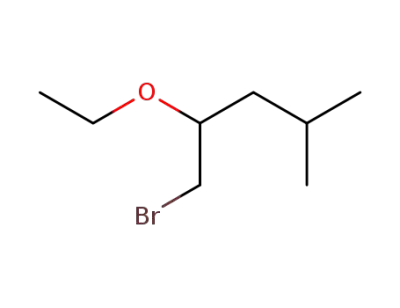
2-ethoxy-1-bromo-4-methyl-pentane
-
626-89-1

4-Methyl-1-pentanol
-
108-84-9

4-methyl-2-pentyl acetate
691-37-2 Downstream products
-
187737-37-7

propene
-
34557-54-5

methane
-
74-84-0

ethane
-
74-85-1
ethene